
If you’ve ever stood in the planner aisle holding a gorgeous paper planner and simultaneously had 45 tabs open comparing digital ones… welcome. You are 100% an ADHDer.
Choosing a planner is a big deal for ADHD brains. It’s not just about preference—it’s about how your brain processes dopamine, handles working memory, deals with executive dysfunction, and navigates overwhelm. Some tools make symptoms worse. Some finally make everything click.
This article breaks down the real differences between digital vs paper ADHD planners, their pros and cons, and when each one works best. And at the end, you’ll see why many ADHDers ultimately choose a hybrid-friendly digital system like ADHD Bright.
Why Planner Choice Matters So Much for ADHD
ADHD brains struggle with:
- Working memory
- Task initiation
- Time blindness
- Decision fatigue
- Emotional regulation
- Long-term consistency
Most traditional planners—especially paper ones—weren’t created with these neurological differences in mind.
But when a planner does align with ADHD brain science? It becomes a second brain, a dopamine engine, and a self-regulation tool all in one.
Detailed Neuroscience Backing
PAPER ADHD PLANNERS
Beautiful, grounding, nostalgic… but are they ADHD-friendly?
Paper planners feel satisfying. They look aesthetic on a desk. And for many ADHDers, writing by hand provides sensory grounding.
Pros of Paper Planners (Especially for ADHD)
1. Physical writing boosts memory retention
Handwriting activates neural pathways for learning and helps with focus.
2. Zero notifications or distractions
You’re never one tap away from TikTok.
3. Sensory satisfaction
Turning pages, using stickers, highlighting—these can give quick dopamine hits.
4. Great for creative ideation
Mind maps, doodles, sketches—paper gives you full creative freedom.
❌ Cons of Paper Planners (Especially for ADHD)
1. Working memory overload
If you forget to open it… it might as well not exist. ADHDers often can’t maintain the habit without external reminders.
Detailed Neuroscience Backing
2. No automation = more decision fatigue
Rewrite tasks. Rewrite dates. Rewrite routines. ADHD brains already face cognitive load challenges.
The Neuroscience Behind the ADH…
3. Hard to restructure if plans change
Messy pages = annoyance → avoidance → abandonment.
4. Can’t capture fast-moving thoughts on the go
ADHD thoughts vanish quickly—you need instant capture tools.
5. Not ideal for time blindness
Paper planners don’t ping you, prompt you, or visually show time passing.
DIGITAL ADHD PLANNERS
Flexible, customizable, instantly accessible—and built for the modern ADHD brain.
A digital ADHD planner shifts the cognitive burden off your brain and into a system that remembers, organizes, and prompts for you.
Detailed Neuroscience Backing
Pros of Digital Planners (Especially for ADHD)
1. They offload working memory
ADHDers benefit dramatically from externalizing tasks, reminders, ideas, and routines.
Detailed Neuroscience Backing
2. Time blindness support
Digital planners can:
- send reminders
- show visual timelines
- use timeboxing
- create transitions
The Neuroscience Behind the ADH…
These features literally help ADHDers see time again.
3. Adaptable & forgiving
Change a date? Done.
Miss a week? It adapts.
Need a new routine? One click.
4. Dopamine-friendly systems
Streaks, progress bars, checkmarks—these fuel the ADHD reward loop.
Detailed Neuroscience Backing
5. Accessible anywhere
Phone, laptop, iPad—your planner is always in your pocket.
6. Everything in one place
Tasks
Habits
Routines
Journaling
Projects
Notes
Finances
Meals
ADHD loves simplicity and hates multi-tool chaos.
ADHD Brand Concept (1)
❌ Cons of Digital Planners (for ADHD)
1. Digital = potential for distraction
If your planner is on your phone, so is Instagram.
2. Can feel too complex if poorly designed
ADHD brains get overwhelmed fast with cluttered apps.
3. Requires some initial setup
Though once set up, it becomes far easier to maintain.
So… Which Is Better for ADHD?
Paper planners are great for grounding and creativity.
Digital planners are better for consistency, memory support, and managing ADHD symptoms
The best planner for ADHD is the one that reduces friction, externalizes memory, simplifies decisions, and rewards action—not the one that looks prettiest.
And that’s why many ADHDers eventually move to digital.
Whichever format you choose, the real magic is in how you use it day to day—this step-by-step guide on how to use a planner with ADHD walks you through building a routine you can actually stick to.
Why ADHD Bright Outperforms Both (According to Neuroscience)
If you want the grounding feeling of a planner plus the executive-function support of a digital system, ADHD Bright was built specifically for this.
Here’s what makes it dramatically more ADHD-friendly than paper—and even most digital tools:
1. Working Memory Offloading
ADHD Bright acts as your Second Brain, capturing ideas instantly through Quick Capture tools. ADHDers forget fast—this system remembers for you.
Detailed Neuroscience Backing
2. Timeboxing & Task Flow Designed for ADHD
ADHDers don’t do well with long to-do lists.
But they do thrive with visual progress and time-blocked focus systems.
The Neuroscience Behind the ADH…
ADHD Bright’s Focus Zone reduces overwhelm and helps you know exactly what to do next.
If timeboxing is new to you, I’ve got a simple walkthrough on how to use timeboxing for ADHD that shows you exactly how to turn your planner into a realistic, ADHD-friendly schedule.
3. Dopamine-Driven Habit Tracking
Small visual rewards = big dopamine release = higher consistency for ADHDers.
Detailed Neuroscience Backing
ADHD Bright uses:
- streaks
- checkmarks
- progress bars
- mini-habits
to keep your brain engaged.
4. CBT-Inspired Journaling for Emotional Regulation
CBT-guided prompts help manage emotional dysregulation, overwhelm, and rejection sensitivity.
Detailed Neuroscience Backing
Paper journaling is great, but structured emotional processing is what ADHD brains actually benefit from.
5. Pre-Built Morning, Night & Weekly Routines
ADHDers struggle with decision fatigue and task initiation.
ADHD Bright removes that barrier entirely.
Detailed Neuroscience Backing
6. Minimal, Overwhelm-Free Design
Clean layouts reduce cognitive load and mental clutter.
Paper planners often become messy fast. ADHD Bright never does.
The Neuroscience Behind the ADH…
7. Everything in One System
No more switching apps (the ADHD downfall).
ADHD Bright is a full ecosystem:
Tasks, habits, routines, finances, projects, meals, journaling, notes—everything lives together.
If you want to see exactly how brain science shapes this system, I break it all down in 7 neuroscience principles behind the ADHD Bright planner.
Final Verdict
| Feature | Paper Planner | Digital Planner | ADHD Bright |
|---|---|---|---|
| Working memory support | ❌ | ✔️ | ✔️✔️ |
| Dopamine rewards | ✔️ (stickers!) | ✔️ | ✔️✔️ |
| Time blindness help | ❌ | ✔️ | ✔️✔️ |
| Emotional regulation tools | ❌ | Some | ✔️✔️ (CBT journaling) |
| Flexible + forgiving | ❌ | ✔️ | ✔️✔️ |
| Brain-science-backed | ❌ | Sometimes | Absolutely |
If your goal is:
- consistency
- clarity
- follow-through
- and structure without overwhelm
a neuroscience-backed digital system will always outperform paper for ADHD brains.
And ADHD Bright was built precisely for that.
If you’re still deciding what setup fits your life, check out my full breakdown of the best ADHD planner for adults (2025) and what actually works so you can compare options side by side.
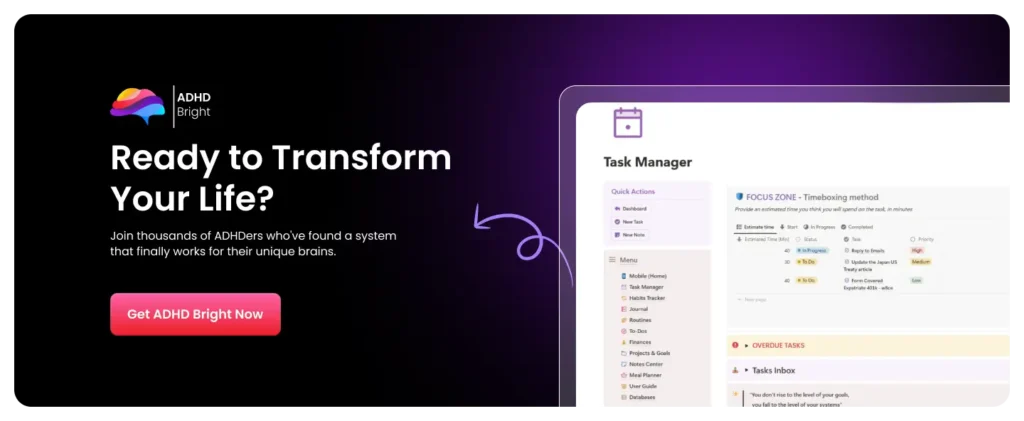
Want a Planner That Actually Works With Your ADHD?
ADHD Bright is the ultimate ADHD-friendly Second Brain—designed using real neuroscience, cognitive psychology, and lived ADHD experience.
- Dopamine-friendly habit tracking
- Timeboxing task manager
- Working-memory offloading
- CBT-based journaling
- Morning & night routines
- Meal planning & finances
- A calm, simple interface
It’s everything your ADHD brain has been asking for—and nothing that overwhelms it.
(It’s a one-time purchase. No subscriptions. No pressure. 30-day guarantee.)