I lost my keys enough times that I finally bought a bowl for them and put it next to the door. When I come home, the keys go in the bowl. When I leave, I take them from the bowl. I've never had to look for them again.

To get organized with ADHD, build a system you can see instead of one you have to remember. Give the things you use every day one fixed spot where you'll see them, keep one place for everything you need to track, and design for your worst day rather than your best one.
You already know organizing is harder with ADHD. Most advice assumes you'll remember where things go and keep a routine running on willpower — and that assumption is what breaks, not you (more on why here).
Start with the result you want, then work backwards. Ask: what would make this so easy that I'd do it without thinking? Then set things up so that the moment you see them, you know what to do next.
Design for your worst day, not your best one. Picture yourself tired, late and scattered. If the setup still works then, it will last.
🎯 Only have energy for three? Every strategy below applies that idea to one part of daily life. Start here:
With ADHD, you probably already organize in piles, whether you realize it or not. Your room might look like a complete mess, yet you still know roughly which pile your charger is in. That's a system. It just doesn't have a proper place yet.
So don't fight the piles. Step back, notice the ones you naturally make, and give each one a dedicated spot:
| Pile | What goes in it | Where it lives |
|---|---|---|
| Wear-again clothes | Clothes that aren't fresh anymore but aren't dirty yet | One basket or hook, so they stop landing on the chair |
| Laundry | Anything that needs washing | A hamper where you undress |
| Paper | Mail, bills, receipts, forms | One tray, emptied during your weekly reset |
| Out the door | Returns, borrowed items, things to post | A bag hanging on the door handle |
Things can be messy inside a pile, as long as they're in the right pile. A random pile on a chair is clutter. A pile with a fixed spot and one purpose is organization.
I lost my keys enough times that I finally bought a bowl for them and put it next to the door. When I come home, the keys go in the bowl. When I leave, I take them from the bowl. I've never had to look for them again.
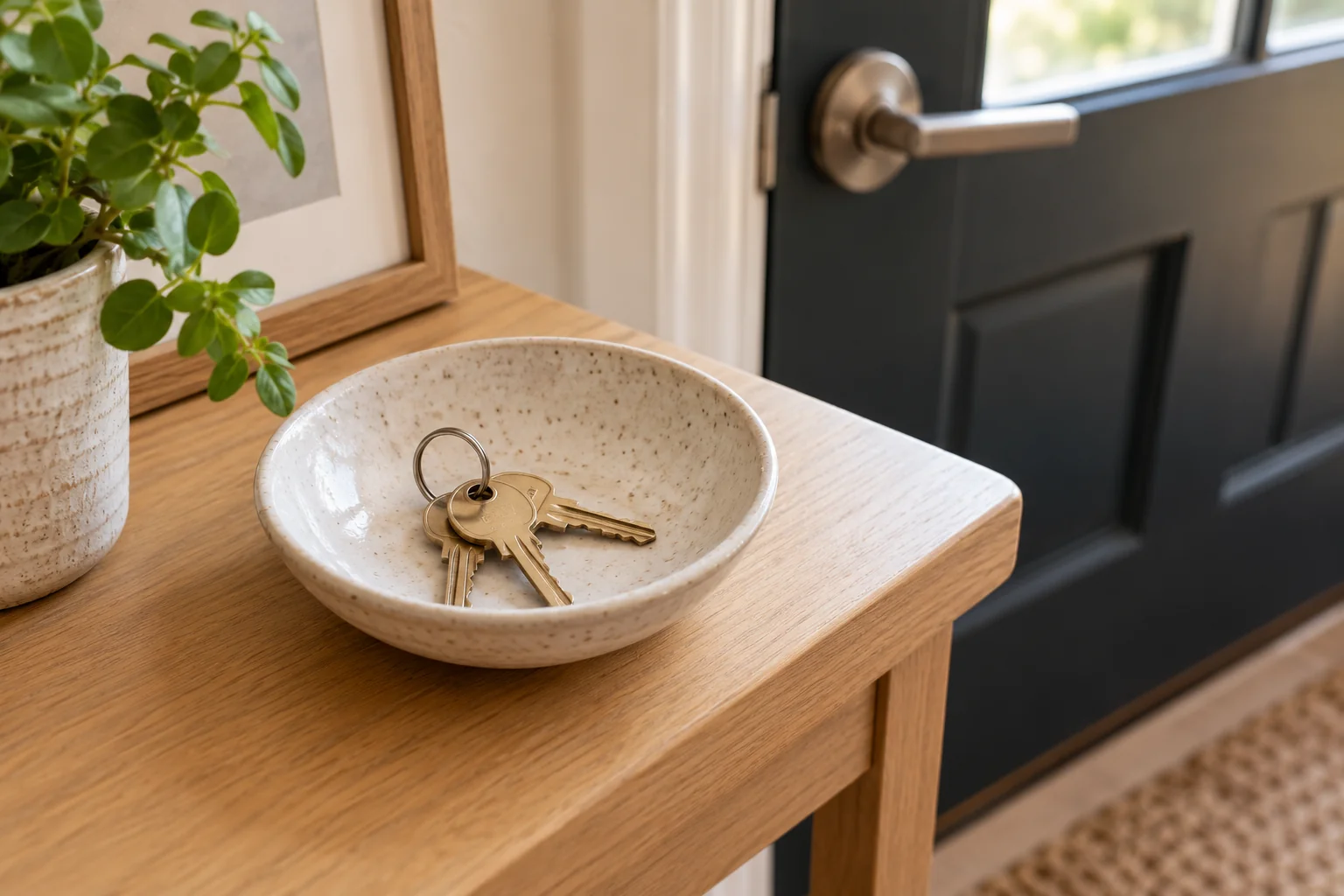
Do the same for whatever you keep losing. Wallet, headphones, sunglasses and your bag can all share one spot by the door, so everything you take when you leave is in one place.
Put each morning task right where you'll be when you need to do it.
For more, see our ADHD morning routine strategies.
Towels on one shelf, cleaning supplies on another, chargers in one box. When a shelf holds only one kind of thing, you can see at a glance what you have, what's missing and where something goes back.
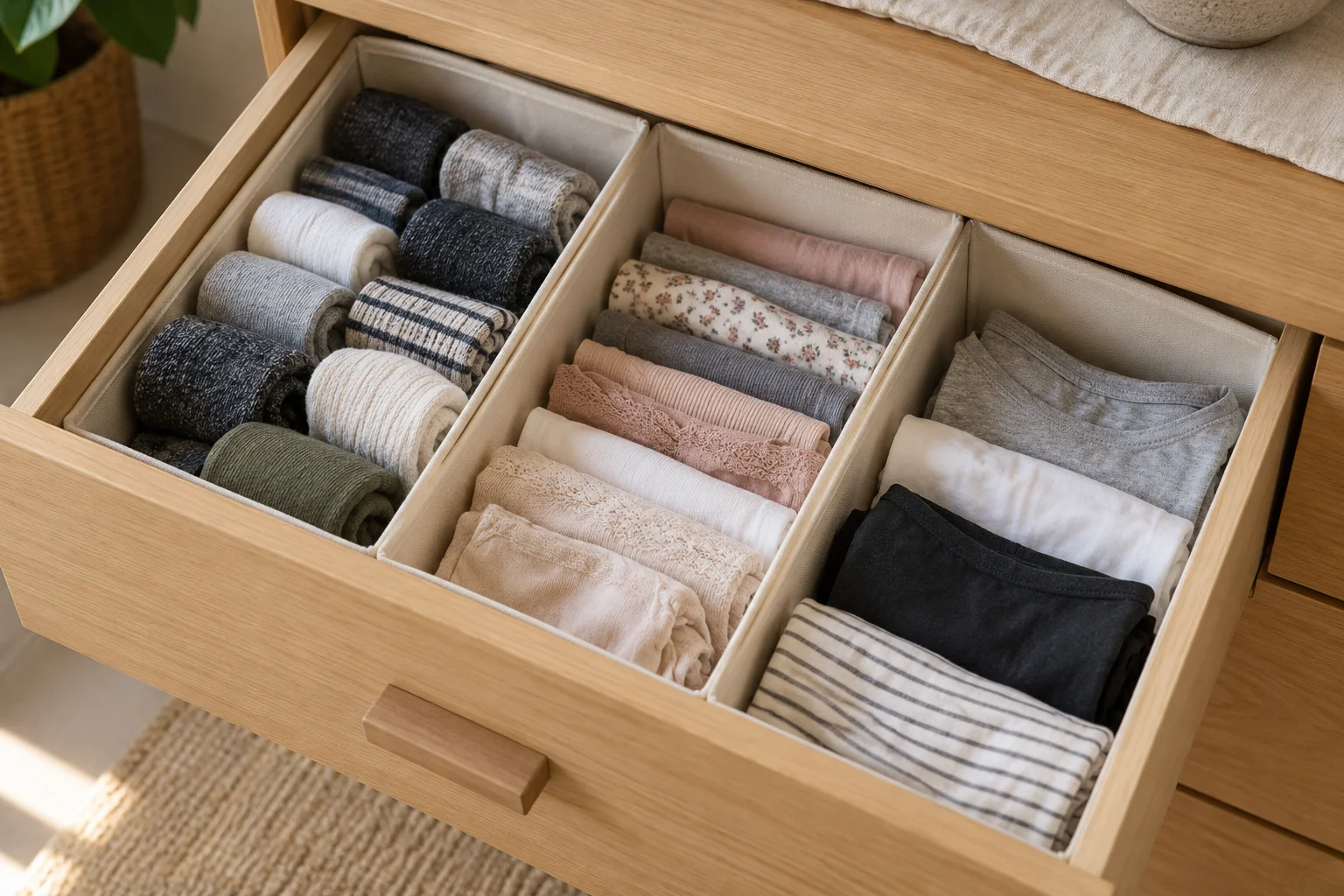
Inside drawers, use organizers. A sock organizer or an underwear divider sounds like a small thing, but it's amazing how clean everything feels once each item has its own slot. You open the drawer and see everything at once.
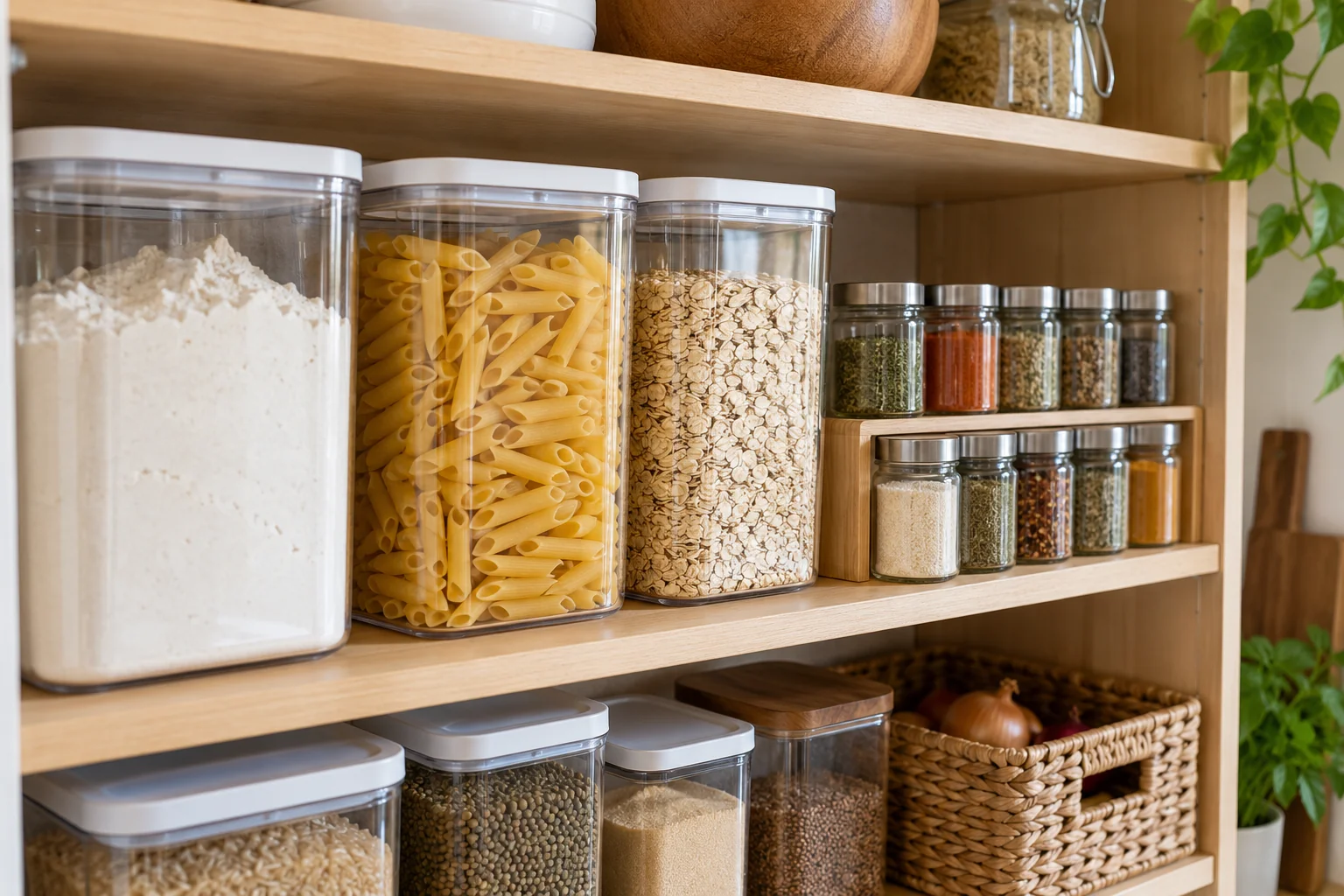
I struggled with cooking for a long time. My whole cooking experience got so much better once I invested in organizing containers for the kitchen.
Now the flour lives in its flour container, and everything else has its own container too. It's visually pleasing, and more importantly, I don't search for anything. I don't dig through cupboards for my spices. Everything is easy to reach, so cooking doesn't start with a hunt.
⚡ The hidden cost of disorganization. It's rarely the task itself that stops you. It's the small obstacles before it: finding the thing, clearing space, remembering where you put the other thing. Remove those, and the task suddenly feels doable.
You don't need a weekend-long clean-out. Each evening, spend five minutes putting visible things back into their piles and homes. Not everything, just what you can see.
While you're at it, set up tomorrow: keys in the bowl, bag packed, clothes laid out. For a room that's already out of hand, start with our guide on how to clean your room with ADHD, and see our ADHD night routine steps for the full wind-down.
Tasks scattered across sticky notes, apps and your head compete for attention all day. Pick one place and use only that.
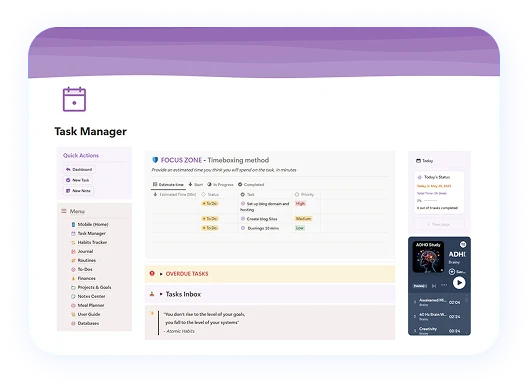
Our guides on project planning and task initiation go deeper.
"What's for dinner?" is a decision you face every day, usually when you're tired and hungry. Planning a whole week ahead can feel overwhelming, so don't start there. Plan just the next few meals.
For how food fits into the bigger picture, read our guide to ADHD and nutrition.
You can't organize money you can't see. For me, the turning point was logging every single expense.
It showed me that coffees and working from a shisha place added up to far more than I had ever realized. I wasn't careless. I just couldn't see it until it was written down.
The rule that makes it work: log it right away, in one line, in one place. If you wait until the end of the week, it won't happen.
A budget planner makes this easier. Here's how to pick an ADHD budget planner you'll actually keep using, and if logging shows you're overspending, try these strategies to stop spending money with ADHD.
Once you can see where money goes, give it boundaries.
Once a week, sit down for 20 to 30 minutes and catch everything that drifted:
This is the habit that keeps every other system from falling apart. Here's how to build an ADHD weekly reset routine.
At some point, the piles will spread, the planner will go quiet and the launch pad will disappear under a jacket. That isn't the system failing for good. It's a normal part of having one.
The mistake is treating a lapse as proof you need a brand-new system. You don't. You need a restart, and it can take ten minutes:
Every restart teaches you something about how you actually live, and the system gets a little closer to fitting you.
For more on staying with it, read how to stick to a routine with ADHD and why showing up imperfectly still counts.
Build systems you can see instead of systems you have to remember. Give the things you use every day one fixed spot where you'll see them, keep tasks, money and meals in one central place, and do a short weekly reset to catch anything that drifted.
Most organizing advice relies on remembering where things go and sticking to routines through willpower. With ADHD, those are often the hardest parts, so systems built around them fall apart. Systems built around visibility and fewer steps hold up better.
Set up a launch pad: one tray or hook by the door for your keys, wallet and anything you take every time you leave. It takes a few minutes, and it shows you how much easier things get when an item has one fixed home.
Stop relying on memory. Keep the things you use daily where you'll see them, write every task in one place the moment it comes up, and put items where you'll use them. When something lives in only one place, you don't have to remember it.
It depends on how you work. The best planner is the one you'll actually open every day. Paper suits people who think by writing, while a digital planner can hold tasks, routines and budgets together and remind you of things. Our digital vs paper ADHD planner comparison walks through the trade-offs.